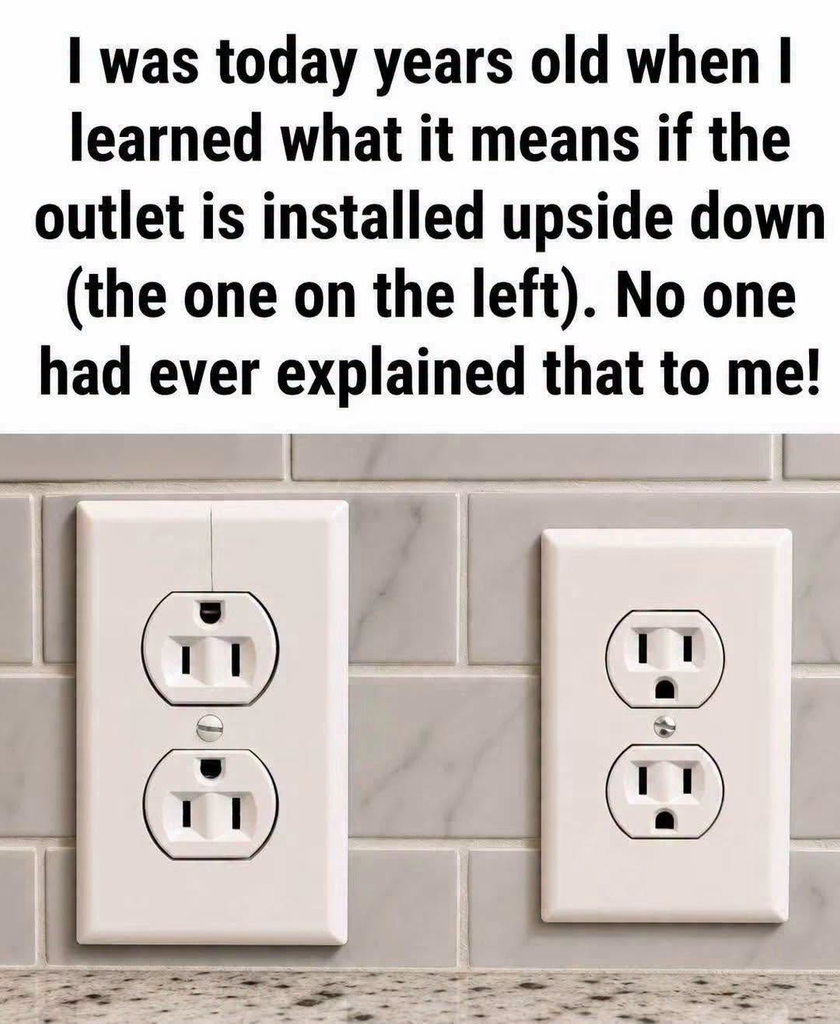
The image above shows two electrical outlets mounted side by side on a tiled wall. The outlet on the left is installed with the grounding pin hole at the top. The outlet on the right is installed with the grounding pin hole at the bottom. The text asks a simple question: what does it mean if the outlet is installed upside down? Many people have never thought about this. But there is a practical reason behind this choice.
The Standard Installation
In most homes in North America, electrical outlets are installed with the grounding pin hole at the bottom. This is the traditional orientation. It is what most people are used to seeing. The two flat slots are at the top, and the round grounding hole is at the bottom. This is considered the standard installation by many electricians.
The “Upside Down” Installation
The outlet on the left is installed with the grounding pin hole at the top. Some people call this upside down. But electricians often call it the safety orientation. It is a deliberate choice. It is not a mistake. It is a way to reduce the risk of electrical shock.
Why the Safety Orientation Matters
If a plug is not fully inserted into the outlet, the prongs can be exposed. If something conductive, like a metal object or a piece of jewelry, falls onto the exposed prongs, it can cause a short circuit or a shock. When the grounding pin is at the top, it is the first point of contact. The grounding pin is longer than the other prongs. It enters the outlet first. This helps to ground the appliance before the live prongs make contact. It also helps prevent the plug from being pulled out accidentally.
When Is It Required?
The safety orientation is not required by the National Electrical Code in the United States. It is a recommendation, not a rule. However, some local building codes may require it in certain situations. It is also common in hospitals and other healthcare facilities. In these settings, safety is a top priority. The upside-down orientation is one small way to reduce risk.
The Bottom Line
The outlet on the left is not installed incorrectly. It is installed in the safety orientation. It is a deliberate choice that can help prevent electrical shocks. If you see an outlet with the grounding pin at the top, do not worry. It is not a mistake. It is a safety feature. It is a small detail that can make a big difference.
Did you know about the safety orientation for electrical outlets? Share this fact with a friend.