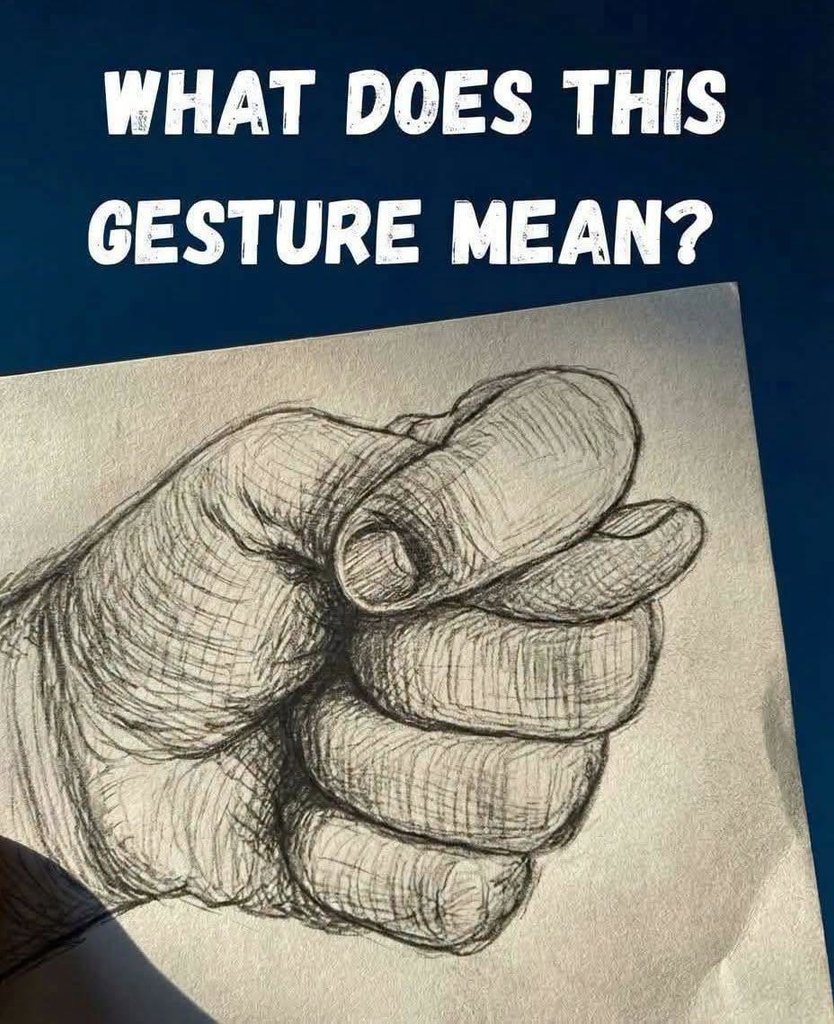
The image above shows a pencil drawing of a hand with the thumb and index finger forming a circle, while the other three fingers are extended. The text asks a simple question: what does this gesture mean? This hand gesture is known as the “OK” sign in many English-speaking countries. However, its meaning changes dramatically depending on where you are in the world. It is a powerful reminder that body language is not universal.
The “OK” Sign in Western Culture
In the United States and many parts of Europe, this gesture is commonly used to mean “okay,” “good,” or “fine.” It is a positive signal. It is often used to show agreement or to indicate that everything is going well. It is a casual and friendly gesture that is widely understood in these regions.
A Deeply Offensive Gesture in Other Cultures
In several countries, including Brazil, Turkey, and parts of the Middle East, this gesture is considered highly offensive. It is often interpreted as an insult or a vulgar expression. In these cultures, the circle formed by the thumb and index finger is seen as a rude reference to a body part. Using this gesture in these regions can cause serious misunderstandings and offense.
The “Money” Gesture in Japan
In Japan, this gesture is often used to symbolize money. The circle formed by the fingers resembles a coin. It is a common way to ask for money or to indicate that something is expensive. This is a completely different meaning from the Western “OK” sign.
The “Perfect” Gesture in Yoga and Meditation
In some spiritual practices, such as yoga and meditation, this gesture is known as the “chin mudra.” It is used to symbolize the union of individual consciousness with universal consciousness. It is a sacred and peaceful gesture. It is used to aid concentration and to promote a sense of calm.
The Importance of Cultural Awareness
This simple hand gesture is a perfect example of how body language can vary across cultures. A gesture that is positive in one country can be offensive in another. It is important to be aware of these differences when interacting with people from different backgrounds. When in doubt, it is always best to avoid using gestures that might be misunderstood.
The Bottom Line
The gesture in the image means “okay” in many Western cultures. But in other parts of the world, it means money, it is a spiritual symbol, or it is a serious insult. Understanding these differences can help you communicate more effectively and respectfully with people from around the world.
Did you know the meaning of this gesture changed depending on the country? Share your thoughts in the comments below.