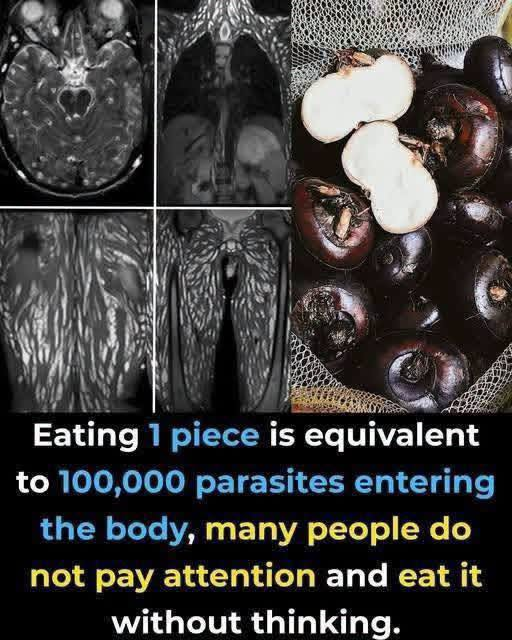
The image above shows a collage of medical scans and a pile of dark, spiky water caltrops. The text claims that eating one piece is equivalent to letting 100,000 parasites into the body. This type of post is often shared on social media to create alarm. However, it is important to look at the facts. The water caltrop is a traditional food, and while there are real risks associated with eating it raw, the situation is not as dramatic as the post suggests.
What Are Water Caltrops?
Water caltrops, also known as water chestnuts or horned water chestnuts, are aquatic plants grown in parts of Asia. They have a hard, dark outer shell and a white, starchy kernel inside. They are a popular ingredient in many traditional dishes. They are also a source of carbohydrates, fiber, and some vitamins and minerals.
The Real Health Concern: Fasciolopsiasis
The actual health concern linked to water caltrops is a parasitic infection called fasciolopsiasis. This infection is caused by a parasite known as Fasciolopsis buski. The parasite attaches to the outer skin of the water caltrop. If a person eats the plant raw or undercooked, they can ingest the parasite. This can lead to gastrointestinal symptoms such as abdominal pain, diarrhea, and nausea. In severe cases, it can cause more serious complications.
Is the “100,000 Parasites” Claim True?
The claim that eating one piece is equivalent to 100,000 parasites is an exaggeration. The number of parasites on a single plant can vary greatly. It depends on the water quality, the farming practices, and how the plant is handled. The risk is real, but it is not guaranteed that every single water caltrop is contaminated. The key is to practice proper food safety.
How to Eat Water Caltrops Safely
The good news is that the parasite is easily killed by cooking. To enjoy water caltrops safely, always cook them thoroughly. Boiling or frying them will destroy any parasites present. Do not peel raw water caltrops with your teeth, as this can expose you to the parasite. Wash your hands after handling raw plants. And avoid drinking untreated water from areas where these plants are grown.
The Bottom Line
Water caltrops are a nutritious food, but they should be cooked properly to avoid the risk of parasitic infection. The alarming claims in the social media post are exaggerated, but the underlying concern about food safety is valid. By cooking the plant and practicing good hygiene, you can enjoy this traditional food without worry.
Have you ever tried water caltrops? Share your experience in the comments below.