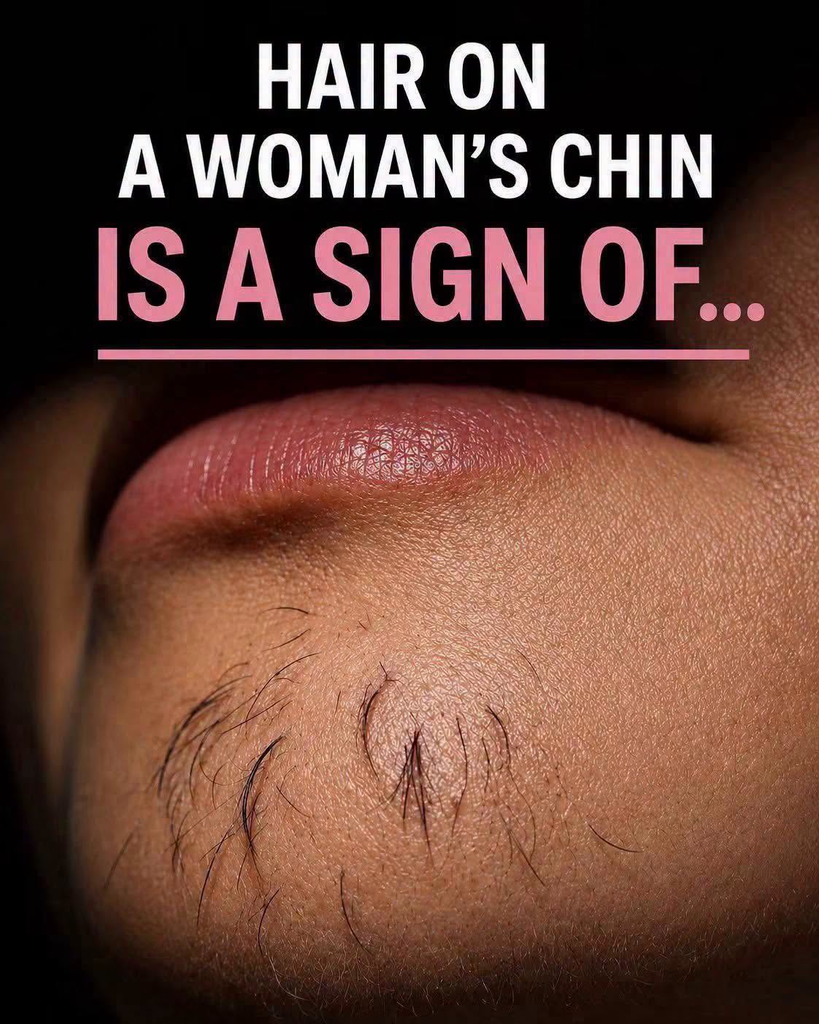
Noticing a few hairs on the chin is common, and it does not automatically indicate a health problem. Facial hair growth varies from person to person and can be influenced by genetics, age, and hormonal changes.
Understanding the possible causes can help explain why chin hair develops and when it may be worth discussing with a healthcare professional.
1. Natural Hormonal Changes
Hormones influence hair growth throughout the body. Changes during puberty, adulthood, and menopause can affect the thickness and distribution of facial hair.
A few isolated chin hairs can occur even when hormone levels are normal.
2. Genetics and Family History
Some people naturally grow more facial hair because of inherited characteristics. If other family members have similar hair growth patterns, genetics may be one contributing factor.
This does not necessarily mean that an underlying medical condition is present.
3. Polycystic Ovary Syndrome (PCOS)
Polycystic ovary syndrome, commonly known as PCOS, is a hormonal condition that can cause increased growth of dark or coarse facial hair.
Other possible symptoms include irregular menstrual periods, acne, and thinning hair on the scalp. However, chin hair alone is not enough to diagnose PCOS.
4. Age and Menopause
As people get older, changes in hormone levels can affect facial hair. Some women notice additional chin or upper-lip hairs during or after menopause.
This can be a normal part of aging, although sudden or substantial changes should be evaluated by a healthcare professional.
5. Certain Medications and Other Conditions
Some medications and less common hormonal conditions can contribute to increased facial hair growth. A healthcare professional can review symptoms, medical history, and medications to help identify a possible cause.
When Should You Seek Medical Advice?
Consider speaking with a healthcare professional if facial hair becomes noticeably thicker or increases rapidly, particularly if it occurs alongside irregular periods, persistent acne, or thinning scalp hair.
Sudden changes accompanied by other significant symptoms deserve prompt medical evaluation.
What Are the Options for Managing Chin Hair?
If chin hair is unwanted, several cosmetic options are available, including shaving, tweezing, waxing, and professional hair-removal treatments. The most appropriate option depends on personal preference and skin sensitivity.
If a hormonal condition is responsible, treating the underlying cause may also help manage hair growth. Medication should only be used with appropriate medical guidance.
The Takeaway
Hair on a woman’s chin can have several explanations, ranging from normal genetic differences to hormonal changes. A few chin hairs do not automatically mean something is wrong. The pattern of growth and any accompanying symptoms are more useful when deciding whether medical advice is needed.
If you have noticed chin hair, remember that it is a common human variation, and you do not need to feel embarrassed about it.