
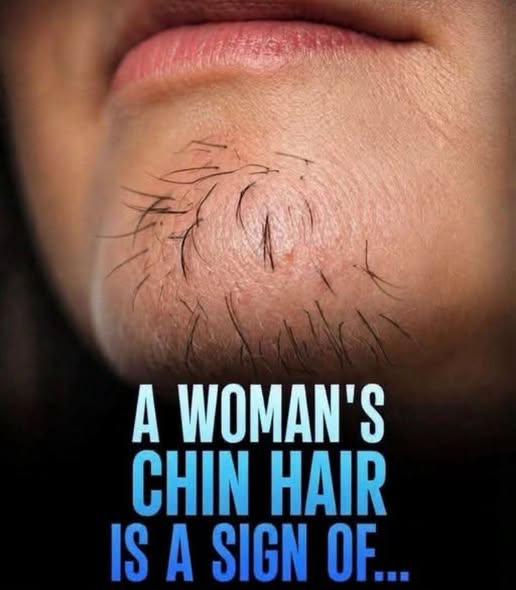
The image above shows a close-up of a woman’s chin with some dark, coarse hair. The text asks a simple question: a woman’s chin hair is a sign of what? This is a common concern for many women. While it can be upsetting or embarrassing, chin hair is actually very common. In most cases, it is a normal part of aging and hormonal changes. However, it can sometimes be a sign of an underlying condition.
Hormonal Changes and Aging
As women age, hormone levels fluctuate. Estrogen levels decline, while androgens, like testosterone, remain relatively stable. This shift can cause hair to grow thicker and darker in areas like the chin and upper lip. This is a normal part of the aging process and is usually nothing to worry about.
Genetics
Genetics play a big role in how much body hair you have and where it grows. If your mother or grandmother had chin hair, you may be more likely to develop it too. It is simply a family trait.
Polycystic Ovary Syndrome
One of the most common medical causes of chin hair in women is polycystic ovary syndrome. This condition affects how the ovaries work and can lead to an imbalance in hormones. Women with polycystic ovary syndrome often have higher levels of androgens, which can cause excess hair growth on the face and body. Other symptoms include irregular periods, acne, and weight gain.
Other Hormonal Conditions
Other conditions that affect hormone levels can also cause chin hair. These include adrenal gland disorders, thyroid issues, and certain tumors. If you notice a sudden increase in facial hair along with other symptoms like fatigue, weight changes, or voice deepening, it is important to see a doctor.
Medications
Some medications can cause excess hair growth as a side effect. These include certain steroids, hormones, and blood pressure medications. If you suspect a medication is causing the issue, talk to your doctor. Do not stop taking any medication without medical advice.
When to See a Doctor
While chin hair is often harmless, there are times when you should seek medical advice. If the hair growth is sudden, rapid, or accompanied by other symptoms like irregular periods, acne, or a deepening voice, it is best to get checked. A doctor can run tests to determine if there is an underlying hormonal imbalance.
What You Can Do
There are many ways to manage chin hair. You can pluck, shave, wax, or use depilatory creams. For longer-lasting results, consider laser hair removal or electrolysis. These methods can be effective but may require multiple sessions. If the cause is hormonal, treating the underlying condition can help reduce hair growth.
The Bottom Line
Chin hair in women is common and often normal. It can be caused by aging, genetics, or hormonal changes. In some cases, it may be a sign of a condition like polycystic ovary syndrome. If you are concerned, talk to your doctor. They can help you find the cause and the best way to manage it. You are not alone, and there are many options available.
Have you ever wondered about chin hair? Share your thoughts in the comments below.